The phrase "optimization layer" gets used in conversations about SaaS and cloud spend without much explanation of what it actually means. It sounds like jargon. It sounds like a vendor category invented to sound more sophisticated than the underlying product. That reaction is understandable, and it deserves a direct answer.
A spend optimization layer is not a new category of software. It is not a procurement tool or a SaaS tracker rebranded with a more ambitious name. It describes a specific way of working: an independent, vendor-agnostic system that sits across your SaaS and cloud procurement and actively drives better outcomes at every stage, from vendor selection to contract renewal.
This post explains what that means in practice, what it covers, and why it matters specifically for mid-size companies.
What Is a Spend Optimization Layer?
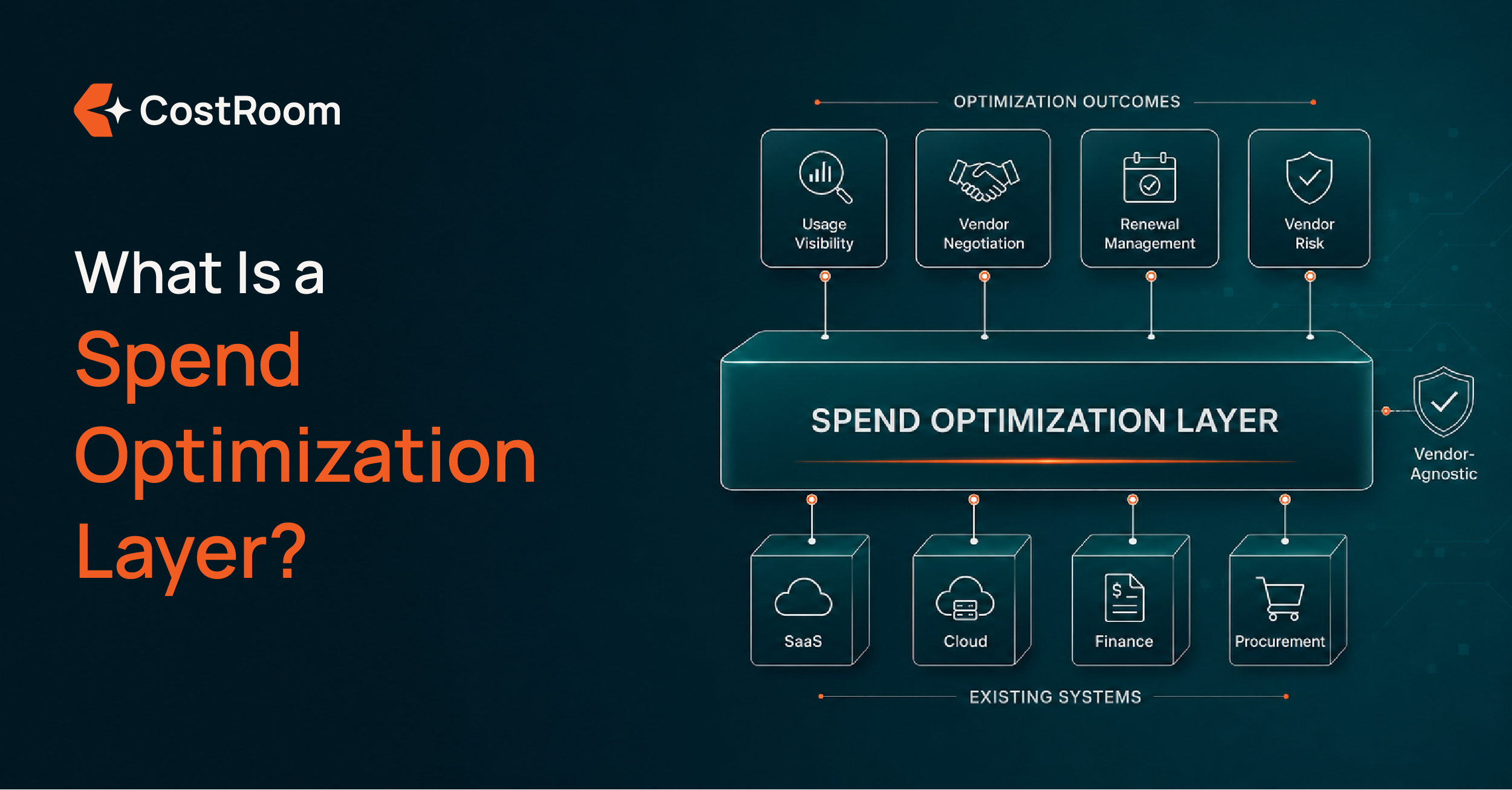
A spend optimization layer is a vendor-agnostic system that works across your SaaS and cloud procurement, from sourcing to renewal, and actively optimizes outcomes at each stage. It is not a replacement for your ERP, finance system, or existing IT management tools. It adds an optimization layer on top of everything already in place, connecting data that currently lives in separate systems and applying market intelligence to reduce what you pay and improve how contracts are managed.
The word "layer" is deliberate. It signals two things: it sits across existing infrastructure rather than replacing it, and it covers the full journey, end to end.
What "Every Layer" Actually Means
Most spend management tools address one or two layers of the problem. A spend optimization layer covers all four.
Usage layer. Are you using what you are paying for? This means licence-level analysis across your SaaS stack: which tools are actively used, which are underutilised, and which have unused seats that could be right-sized or eliminated. On the cloud side, it means identifying over-provisioned resources, idle compute instances, and storage commitments that are billed without serving an active workload. The output is a clear picture of where the company is paying for more than it needs.
Negotiation layer. Are you paying market rate? Most mid-size companies accept vendor pricing at renewal without comparing it against what comparable companies pay for the same services. Vendor benchmarking uses live market data to identify where rates are above market and by how much, then applies that intelligence to renewal negotiations and, where terms allow, mid-contract renegotiations. This is where most companies leave the most money on the table, because they are negotiating without data.
Renewal layer. Are you in control of your contract cycle? A mid-size company managing well over a hundred SaaS tools, plus cloud commitments and reserved instance agreements, has dozens of contracts coming up for renewal every quarter. Without a structured system, the default outcome is the vendor's preferred outcome: auto-renewal at the prior rate, or a price increase buried in the renewal notice. Structured renewal management turns this into a proactive process, with a 12-month renewal calendar and every contract treated as a deliberate decision. CostRoom's Renewal Management product handles this tracking across SaaS and cloud portfolios of any complexity.
Vendor risk layer. Is your stack appropriately consolidated and compliant? This layer examines which vendors create concentration risk (critical functions dependent on a single vendor), compliance exposure (vendors handling sensitive data without adequate contractual protections), and functional redundancy (two or more tools solving the same problem across different budget lines). Redundancy is more common than most CFOs expect: at a company with over a hundred tools, it is routine to find three or four tools performing overlapping functions across different departments, each with a separate contract and renewal cycle. This connects spend optimization to operational resilience, not just quarterly cost reduction.
Each of these layers delivers value independently. Managed together, as a coordinated system rather than four separate initiatives, they compound in ways that individually scoped tools cannot replicate.
What "Vendor-Agnostic" Means and Why It Matters
Most tools that help with SaaS or cloud spend have vendor relationships. Resellers earn margin on the contracts they facilitate. Managed service providers have preferred supplier arrangements. Some SaaS management platforms have commercial relationships with the vendors whose tools appear in their dashboards.
These relationships are not always disclosed, and they create a structural conflict: the tool recommending which vendors to use or renew has a financial interest in the outcome.
A vendor-agnostic optimization layer has no vendor partnerships, no OEM agreements, and no financial relationships with the vendors it helps manage. Recommendations are based entirely on market data and the company's specific spend profile. No kickbacks, no preferred suppliers, no bias toward any outcome except the customer's. This independence is what makes the analysis credible, and it is what separates this model from a reseller or a managed service provider with preferred supplier arrangements.
For the CFO or IT Director evaluating spend optimization options, vendor-agnostic status is the single most important differentiator to verify before committing to any provider.
Why Mid-Size Companies Specifically?
The spend optimization layer model is purpose-built for companies in the 200-500+ employee range because those companies face a specific problem that neither the enterprise market nor the startup market has solved.
Enterprises have dedicated procurement teams, category managers, and the budget to engage specialist consultants. They manage spend complexity with internal headcount and infrastructure built for exactly that purpose.
Early-stage companies manage spend manually. Their stacks are small enough that spreadsheets and calendar reminders are sufficient, if imperfect.
Mid-size companies are in neither position. They are managing stacks that are genuinely complex, often well over a hundred tools across SaaS and cloud infrastructure, with procurement cycles that stretch weeks and contracts coming up for renewal every quarter. But they do not have the internal team to manage that complexity at an enterprise level, and they cannot justify the cost of enterprise-grade consulting to do it for them.
A spend optimization layer is designed for that segment: structured enough to handle genuine portfolio complexity, lean enough to deliver results without a dedicated internal team to run it. For the full picture of what spend optimization covers across SaaS and cloud, see the complete guide to SaaS and cloud spend optimization.
How It Differs From What You Already Have
The distinction is worth stating plainly, because it comes up in almost every conversation about spend optimization.
A procurement tool manages how purchases get approved: the workflow from request to purchase order to vendor onboarding. It is a process tool. It ensures the right people approve the right purchases through the right steps. It does not ask whether those purchases are right-priced, whether the vendor is the best option, or whether the tool will still be actively used in six months.
A SaaS management platform provides licence-level visibility: which applications exist in the stack, who is using them, and how often. It is valuable for IT teams. It does not negotiate contracts, it does not touch cloud infrastructure, and it does not produce the renewal intelligence needed to manage a mixed portfolio.
A cloud cost tool optimises infrastructure spend from an engineering perspective: resource utilisation, waste reduction, savings plans. It does not see SaaS contracts or renewal dates.
A spend optimization layer is not a competitor to any of these tools. It works alongside them, connecting data from different sources, adding market intelligence, and actively driving the outcomes that individually scoped tools cannot produce. For a detailed breakdown of the difference between procurement software and spend optimization specifically, see Procurement Software vs. Spend Optimization: Why Having One Doesn't Mean You Have the Other.
For mid-size companies managing SaaS and cloud costs in separate systems today, this context is also directly relevant: why managing SaaS and cloud spend separately is costing you.
Frequently Asked Questions
What is a spend optimization layer? A spend optimization layer is a vendor-agnostic system that sits across a company's SaaS and cloud procurement, from vendor selection through contract renewal, and actively drives better financial outcomes at every stage. It covers four areas: usage visibility (identifying underutilised licences and over-provisioned cloud resources), vendor negotiation (benchmarking rates against live market data), renewal management (treating every renewal as a deliberate decision rather than an automatic one), and vendor risk (identifying concentration risk, compliance exposure, and functional redundancy in the stack).
How is a spend optimization layer different from procurement software? Procurement software manages the buying process: approval workflows, purchase orders, vendor onboarding, and invoice matching. It governs how purchases happen. A spend optimization layer manages what happens after the purchase is made: whether the tool is still used, whether the price remains at market rate, and whether the renewal is handled proactively. Procurement manages process; spend optimization manages outcomes. The two address sequential stages of the same challenge and work best together.
What does "vendor-agnostic" mean in spend optimization? Vendor-agnostic means the optimization provider has no financial relationships with the vendors it helps you manage. No reseller margin, no OEM agreements, no preferred supplier arrangements. Recommendations are based entirely on market data and the company's specific spend profile. This matters because many tools that help manage SaaS or cloud spend have undisclosed commercial relationships with the vendors they recommend, which creates a structural conflict. An independent, vendor-agnostic position is the only one that produces genuinely unbiased analysis.
Why do mid-size companies specifically need a spend optimization layer? Mid-size companies at the 200-500+ employee stage manage stacks that are genuinely complex: well over a hundred SaaS tools, multi-cloud infrastructure, and dozens of contracts coming up for renewal every quarter. But they typically do not have the internal procurement headcount to manage this complexity at an enterprise level, and enterprise-grade consulting is priced for a different scale. A spend optimization layer is designed for exactly this gap: capable enough to handle real portfolio complexity, structured enough to deliver results without a dedicated internal team.
Can a spend optimization layer work alongside existing procurement tools? Yes. A spend optimization layer is designed to complement existing tools, not replace them. It connects data from systems that do not currently communicate with each other, adds market intelligence that those tools do not provide, and drives outcomes that individually scoped tools cannot produce. A company with procurement software, a SaaS management platform, and a cloud cost tool still benefits from a spend optimization layer, because none of those tools negotiate contracts, produce renewal intelligence across SaaS and cloud together, or assess vendor risk at a portfolio level.
Related reading: